


Creatine is one of the most misunderstood supplements in sport and fitness, yet it is also one of the most rigorously tested. Many athletes assume it is reserved for elite bodybuilders or that it carries hidden health risks. In reality, over 680 clinical trials have confirmed both its safety and effectiveness, placing it firmly among the most evidence-backed supplements available. Whether you are chasing a new personal best, recovering faster between sessions, or simply trying to build lean muscle more efficiently, understanding creatine properly changes how you train.
Table of Contents
- What is creatine and how does it work?
- Top proven benefits for athletes and fitness enthusiasts
- Creatine safety: What long-term research really shows
- Who should (and should not) use creatine?
- How to take creatine: Dosing, timing and practical tips
- Creatine forms, stacking and common questions
- Optimise your performance with quality creatine supplements
- Frequently asked questions
Key Takeaways
| Point | Details |
|---|---|
| Extensively research-backed | Creatine is one of the most tested supplements with strong safety and efficacy evidence. |
| Boosts real-world performance | Supplementing creatine can notably increase strength, power, and muscle gains for active users. |
| Safe for most people | Long-term use is considered safe for healthy individuals, though those with kidney issues should avoid supplementation. |
| Simple, effective dosing | Consistent daily dosing is key, and most benefits can be achieved with a low-maintenance approach. |
| Not for everyone | Some users may see limited effects due to genetic factors or health status. |
What is creatine and how does it work?
Creatine is a naturally occurring compound stored primarily in your skeletal muscle. Your body synthesises it from amino acids, and you also obtain small amounts through red meat and fish. However, dietary intake alone rarely saturates your muscle stores, which is where supplementation becomes genuinely useful.
At its core, creatine’s job is to help regenerate adenosine triphosphate (ATP), the primary energy currency your muscles use during explosive, high-intensity effort. When you sprint, lift heavy, or push through a final set, your ATP depletes rapidly. Creatine phosphate donates a phosphate group to replenish ATP faster, meaning you can sustain peak output for slightly longer before fatigue sets in. Understanding creatine’s health effects in this context makes the performance gains far less surprising.
Creatine boosts ATP regeneration, giving your muscles the energy to sustain explosive effort longer and recover faster between hard sets.
Key facts about how creatine works:
- Your muscles store creatine as phosphocreatine, ready to be used during short bursts of effort
- Supplementation can raise muscle creatine stores by up to 40% above baseline
- Creatine increases ATP production, directly supporting strength output and recovery from high-intensity exercise
- The effect is most pronounced in activities lasting under 30 seconds, such as sprinting or heavy compound lifts
Top proven benefits for athletes and fitness enthusiasts
With the mechanism clear, the performance outcomes become predictable. Meta-analyses consistently show that creatine combined with resistance training produces measurable, meaningful results across multiple markers of athletic performance.
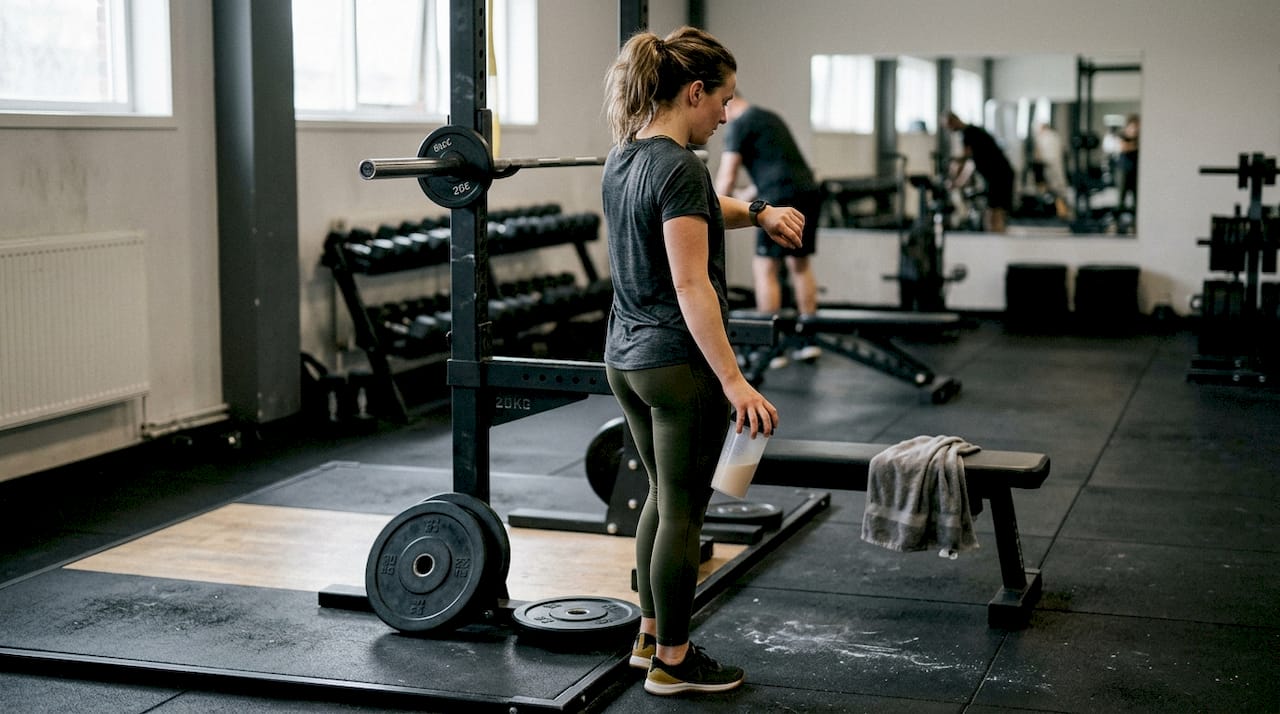
According to pooled research, creatine plus resistance training increases lean body mass by 1.1 kg, reduces body fat by approximately 0.88%, and delivers the greatest strength gains during high-intensity efforts. These are not marginal numbers. For a competitive athlete or a dedicated gym-goer, they represent real, tangible progress.
| Outcome | Change with creatine and training |
|---|---|
| Lean body mass | +1.1 to 1.14 kg |
| Body fat percentage | Reduced by ~0.88% |
| Maximal strength | Significant improvement in high-intensity lifts |
| Sprint and jump performance | Measurable gains in explosive output |
| Muscle recovery | Faster return to baseline between sessions |
Creatine is particularly advantageous for:
- Weightlifting and powerlifting, where short bursts of maximal effort are repeated
- Sprint-based sports such as football, rugby, and athletics
- High-volume training blocks where recovery between sessions is critical
- Supporting muscle recovery supplements protocols when stacked with other recovery aids
The role of amino acids and muscle health is complementary here. Creatine handles the energy side; amino acids handle the structural repair. Together, they cover two of the most important pillars of performance nutrition.
Pro Tip: Consistency matters far more than timing. Taking your daily dose at the same time each day, regardless of whether it is pre or post-workout, produces the same long-term results. Do not overthink the clock.
Creatine safety: What long-term research really shows
Safety concerns are the most common reason people hesitate to use creatine. The myths around kidney damage, dehydration, and even cancer risk have circulated for decades. The evidence tells a very different story.
Clinical trials lasting up to 14 years, with doses as high as 30g per day, have found no evidence of kidney damage, dehydration, or increased cancer risk in healthy individuals. The most commonly reported side effect is minor gastrointestinal discomfort, which typically occurs only when large doses are taken at once without food.
Early concerns about kidney damage and dehydration have been thoroughly debunked by decades of controlled research. For healthy users, creatine is among the safest supplements available.
| Common concern | What long-term studies actually found |
|---|---|
| Kidney damage | No evidence in healthy individuals |
| Dehydration | No increased risk; hydration unaffected |
| Cancer risk | No association found in any trial |
| Liver stress | No adverse effects in healthy users |
| Muscle cramping | No greater incidence than placebo groups |
That said, nuance matters. Creatine is not recommended for individuals with diagnosed kidney disease, as the additional metabolic load may be problematic. Pregnant women should also avoid it due to limited safety data in that population. For everyone else, the supplement safety advice is straightforward: use a reputable brand, stay hydrated, and stick to recommended doses.
Pro Tip: Supplement quality and athlete health are directly linked. Always choose a product that is third-party tested and free from unnecessary fillers. Purity matters as much as dosage.
Side effects to be aware of:
- Water retention in muscle tissue, which can cause a small, temporary weight increase
- Mild stomach upset if taken in large single doses on an empty stomach
- Elevated creatinine levels on blood tests, which can be misread as a kidney issue but is a normal metabolic response
Who should (and should not) use creatine?
Creatine is not a niche supplement for elite athletes. Most healthy, active adults stand to benefit, including those over 50 who are looking to preserve muscle mass and maintain strength as they age.
However, it is not suitable for everyone. Here is a clear breakdown:
Those who benefit most:
- Healthy adults engaged in resistance or high-intensity training
- Athletes in power-based sports seeking explosive performance gains
- Older adults (50+) looking to counter age-related muscle loss
- Vegetarians and vegans, who typically have lower baseline muscle creatine levels
Those who should exercise caution or avoid it:
- Individuals with diagnosed kidney disease or reduced kidney function
- Pregnant or breastfeeding women, due to limited safety data in these groups
- Anyone with frequent digestive issues who may struggle with higher doses
- Those on medications that affect kidney function should consult a GP first
One important reality: around 20 to 30% of users are classified as non-responders. This means their muscle creatine levels do not increase significantly with supplementation, often due to genetics or already high baseline stores. If you have been taking creatine consistently for four to six weeks with no noticeable change, you may fall into this group.
Creatine works best for those with lower baseline stores. If you eat little or no meat, or are new to structured training, your response is likely to be stronger.
Understanding supplement quality and personalisation helps you make smarter decisions about whether creatine fits your specific goals and physiology.
How to take creatine: Dosing, timing and practical tips
There are two main approaches to creatine supplementation, and both are effective. Your choice depends on how quickly you want to saturate your muscle stores.
Option 1: Loading protocol (faster results)
- Take 20g per day (split into four 5g doses) for five to seven days
- Follow with a maintenance dose of 3 to 5g per day thereafter
- Expect muscle stores to be fully saturated within one week
- Best for those with a competition or training block approaching soon
Option 2: Daily low-dose protocol (gentler start)
- Take 3 to 5g per day from the outset, with no loading phase
- Muscle stores reach saturation after approximately three to four weeks
- Lower risk of any gastrointestinal discomfort
- Equally effective long-term, just slower to reach full saturation
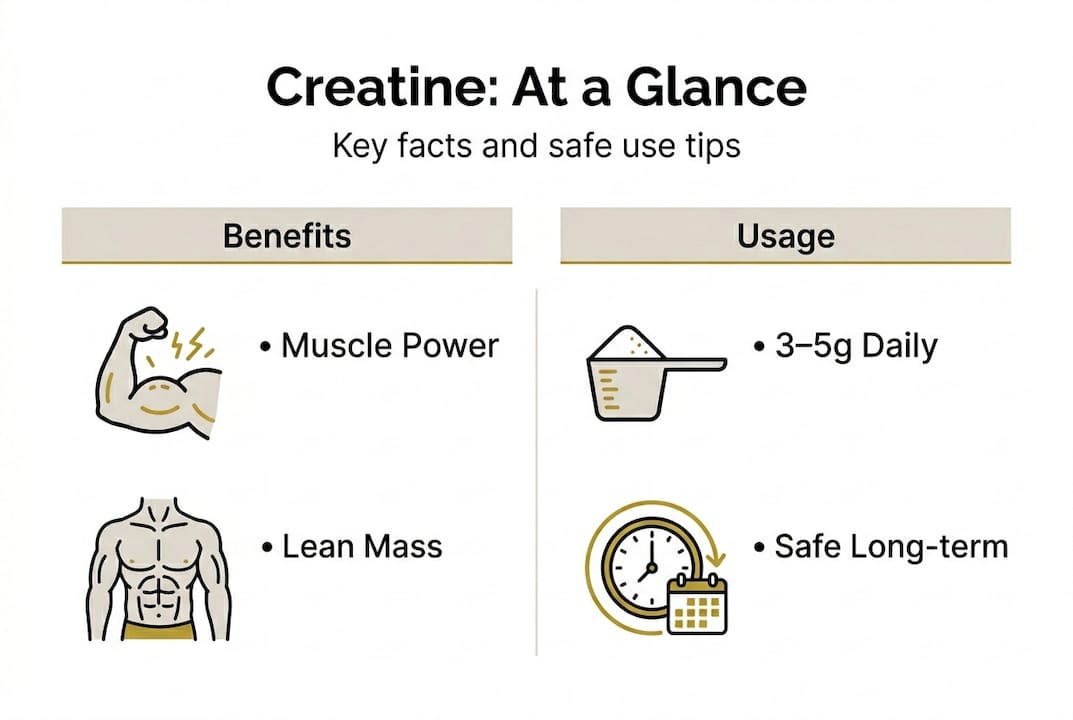
The standard dosing protocol is 0.3g per kilogram of bodyweight per day during loading, followed by 3 to 5g daily for maintenance. Daily consistency is the most important variable. Timing relative to your workout matters far less than simply taking it every day.
Pro Tip: Taking creatine alongside carbohydrates or immediately post-exercise can marginally improve uptake due to insulin-mediated transport. A shake with your micronised creatine monohydrate and a banana is a simple, practical combination.
Creatine forms, stacking and common questions
Walk into any supplement shop and you will find creatine in several forms. The variety can be confusing, but the science here is refreshingly clear.
Creatine monohydrate remains the gold standard. It is the most extensively researched form, the most cost-effective, and the form used in virtually every major clinical trial. The benefits of creatine monohydrate are backed by decades of consistent evidence.
Creatine HCL (hydrochloride) is more soluble in water, which means it mixes more easily and may cause less stomach discomfort for sensitive users. However, no clear performance advantage over monohydrate has been demonstrated in research. It costs more for no proven extra benefit.
Common questions answered:
- Can I stack creatine with protein? Yes. Combining creatine with a quality whey protein is one of the most popular and effective stacks for muscle growth and recovery. Check the supplement stacking guide for more detail.
- Does caffeine cancel out creatine? Early research suggested a possible interaction, but more recent evidence shows no meaningful interference when both are taken regularly.
- Can I travel with creatine? Absolutely. Pre-measured doses in a small container or resealable bag are easy to carry and perfectly legal in all sports competitions under current anti-doping rules.
- Should I cycle creatine? There is no scientific basis for cycling creatine. Continuous daily use is safe and maintains elevated muscle stores without any need for breaks.
- Does creatine work for endurance sports? The evidence is weaker here. Creatine’s primary benefit is in short, explosive efforts. Endurance athletes may see some benefit in sprint finishes or interval sessions, but it is not the primary tool for long-distance performance.
Optimise your performance with quality creatine supplements
Knowledge is only useful when it translates into action. If the evidence has convinced you that creatine belongs in your training stack, the next step is choosing a product that actually delivers what the science promises.
At Elevate Supplements, our pure micronised creatine is 100% creatine monohydrate with no fillers, no proprietary blends, and no compromise on purity. Micronised particles dissolve more easily and absorb more efficiently, making it the practical choice for daily use. For those focused on maximising muscle growth, pairing it with our whey protein for recovery covers both the energy and structural repair sides of performance nutrition. Add an Elevate energy shaker to your order and you have everything you need to build a consistent, effective supplement routine. We offer free UK and Ireland delivery on orders over £100, with secure checkout and easy returns.
Frequently asked questions
Does creatine cause water retention or weight gain?
Yes, creatine draws water into muscle tissue, which can cause a small weight increase due to water retention. This is not body fat and is generally considered a positive sign that your muscles are responding to supplementation.
Is creatine safe for long-term use?
Long-term trials up to 14 years show no increased risk of kidney damage or cancer in healthy individuals. Creatine is one of the most safety-tested supplements in sports nutrition.
How quickly can I expect results from creatine supplementation?
Performance and lean mass changes are typically visible within two to four weeks when taken consistently. A loading protocol can accelerate this to within the first week.
Are there people who don’t benefit from creatine?
Yes. 20 to 30% of individuals are creatine non-responders due to genetic factors or already high baseline muscle creatine levels. If you see no change after six weeks of consistent use, you may be in this group.
Can I take creatine if I am vegetarian or vegan?
Absolutely, and you may actually respond better. Vegetarians and vegans typically have lower baseline muscle creatine levels, meaning supplementation produces stronger gains compared to regular meat eaters.
Recommended
- Why choose clean supplements for athletic performance in 2026 – ElevateSupplements
- Guide to pre-workout supplements for better workouts 2026 – ElevateSupplements
- Why cycle supplements for performance and recovery in 2026 – ElevateSupplements
- 6 Best Supplements for Muscle Recovery: Athlete’s Guide – ElevateSupplements


