


TL;DR:
- Supplements support performance, recovery, and health when used to fill nutritional gaps. Most athletes rely on well-established options like creatine, caffeine, and protein for measurable benefits. Prioritize a balanced diet and personalized, quality supplement use for optimal results.
Supplements are not just for professional athletes. Whether you’re training for a half marathon, lifting three times a week, or simply trying to recover faster between sessions, targeted wellness supplementation can offer real, measurable benefits. The idea that only elite performers need to think about what goes into their body is one of the most persistent myths in sports nutrition. Dietary supplements are defined as concentrated sources of nutrients or other substances with nutritional or physiological effects, taken to support performance, recovery, and health optimisation. This guide breaks down the evidence, the key categories, and how to use them intelligently.
Table of Contents
- Understanding wellness supplementation
- Core supplement categories and their effects
- Protein, amino acids, and muscle repair
- Speciality supplements: omega-3, antioxidants, and inflammation management
- Choosing, using and personalising your supplementation
- Why food first, supplement smart is the most effective approach
- Take the next step towards optimised recovery and performance
- Frequently asked questions
Key Takeaways
| Point | Details |
|---|---|
| Supplements support—not replace—diet | A balanced diet remains fundamental, with supplements bridging targeted nutritional needs for performance and recovery. |
| Evidence-based supplement choices | Creatine, caffeine, protein, and omega-3s offer the strongest benefits for active individuals and athletes seeking optimal results. |
| Personalisation delivers results | Effectiveness varies between individuals, so trialling under professional guidance is best for tailoring supplementation. |
| Monitor safety and quality | Choose certified, quality-tested products and consult trusted sources for safe, effective supplementation. |
Understanding wellness supplementation
Wellness supplementation means using dietary supplements to support, not replace, a healthy and balanced diet. Think of it as filling in the gaps that food alone may not always cover, particularly when training loads increase, recovery windows shrink, or specific physiological demands rise. The role of supplements in wellness is genuinely supportive rather than transformative on its own.
The main goals of wellness supplementation include:
- Performance enhancement: improving output, power, and endurance during training or competition
- Recovery support: reducing muscle soreness, inflammation, and fatigue between sessions
- Health optimisation: maintaining immune function, joint health, and long-term physical resilience
- Nutritional gap-filling: addressing shortfalls in micronutrients or macronutrients from diet alone
“Wellness supplementation refers to the use of dietary supplements, defined as concentrated sources of nutrients or other substances with nutritional or physiological effects, taken to supplement the normal diet for performance enhancement, recovery, and health optimisation in athletes.” — Frontiers in Nutrition
The scale of supplement use in sport is striking. 75% of college athletes report using some form of dietary supplement, which tells you this is a mainstream practice, not a niche one. Supplements sit within a broader nutritional strategy that prioritises whole foods, adequate hydration, and appropriate caloric intake first.
In the UK and Ireland, supplements are regulated as foods rather than medicines. This means they do not require clinical trial approval before sale, which is why supplement quality for athletes matters so much. Third-party testing and reputable sourcing are non-negotiable when you are serious about what you put into your body.
Core supplement categories and their effects
Not all supplements are created equal, and the evidence behind them varies considerably. Here is a breakdown of the most commonly used categories and what the research actually supports.
| Supplement | Target outcome | Typical dosage | Evidence strength |
|---|---|---|---|
| Creatine monohydrate | Strength and anaerobic power | 3 to 5g daily | Very strong |
| Caffeine | Endurance and power output | 200 to 400mg | Very strong |
| Whey protein | Muscle repair and mass | 20 to 40g post-exercise | Strong |
| Omega-3 fatty acids | Inflammation and joint health | 1 to 3g EPA/DHA | Moderate to strong |
| Antioxidants (e.g. tart cherry) | Oxidative stress reduction | Varies by form | Moderate |
Creatine monohydrate enhances rapid energy production via the ATP-PC system, making it particularly effective for high-intensity, short-duration efforts like sprinting, weightlifting, and team sports. Meanwhile, caffeine at 3 to 6 mg/kg stimulates fat oxidation, spares muscle glycogen, and reduces perceived exertion, making it one of the most versatile performance aids across virtually every sport.
Key performance and recovery targets by supplement:
- Creatine: anaerobic power, strength, muscle volume
- Caffeine: endurance, alertness, pain perception during effort
- Protein: muscle protein synthesis, recovery, lean mass retention
- Omega-3s: inflammation control, joint mobility, cardiovascular health
- Antioxidants: post-exercise oxidative damage, immune resilience
Individual response varies considerably. Gender differences are particularly understudied, and performance supplementation strategies should account for your specific sport, body composition, and training phase.
Pro Tip: Do not layer multiple new supplements at once. Introduce one at a time over two to four weeks so you can accurately assess what is working for your body.
Protein, amino acids, and muscle repair
Protein is the most discussed supplement category for good reason. After exercise, muscle fibres undergo micro-damage and require amino acids to rebuild stronger. Supplemental protein, particularly whey and collagen, provides a rapid and convenient source of these building blocks when whole food intake is insufficient or impractical post-training.

A recent meta-analysis comparing protein types found some genuinely surprising results. Collagen outperformed whey in certain metrics, with a standardised mean difference of 0.41 for strength gains and 0.94 for fat-free mass, compared to whey’s 0.15 and 0.16 respectively. This challenges the long-held assumption that whey is always the superior choice for muscle outcomes.
| Protein type | Strength SMD | Fat-free mass SMD |
|---|---|---|
| Whey | 0.15 | 0.16 |
| Collagen | 0.41 | 0.94 |
To get the most from protein supplementation, follow these steps:
- Assess your daily intake: aim for 1.6 to 2.2g of protein per kilogram of bodyweight on training days
- Time it well: consume 20 to 40g within 30 to 60 minutes post-exercise for optimal muscle protein synthesis
- Choose your form: whey is fast-digesting and ideal post-workout; collagen supports connective tissue and may suit endurance athletes
- Monitor progress: track strength and recovery quality over four to six weeks before adjusting
For deeper guidance on recovery supplements for muscle repair and how amino acids support recovery, the evidence is clear that consistent intake matters more than perfect timing.
Pro Tip: Full-fat milk provides a near-ideal blend of fast and slow proteins alongside carbohydrates and electrolytes. For many athletes, it rivals commercial recovery drinks at a fraction of the cost.
Speciality supplements: omega-3, antioxidants, and inflammation management
Beyond protein, a handful of specialist nutrients play a vital role in reducing recovery time and supporting overall wellbeing. These are often overlooked in favour of the headline supplements, but their cumulative impact on long-term athletic health is significant.
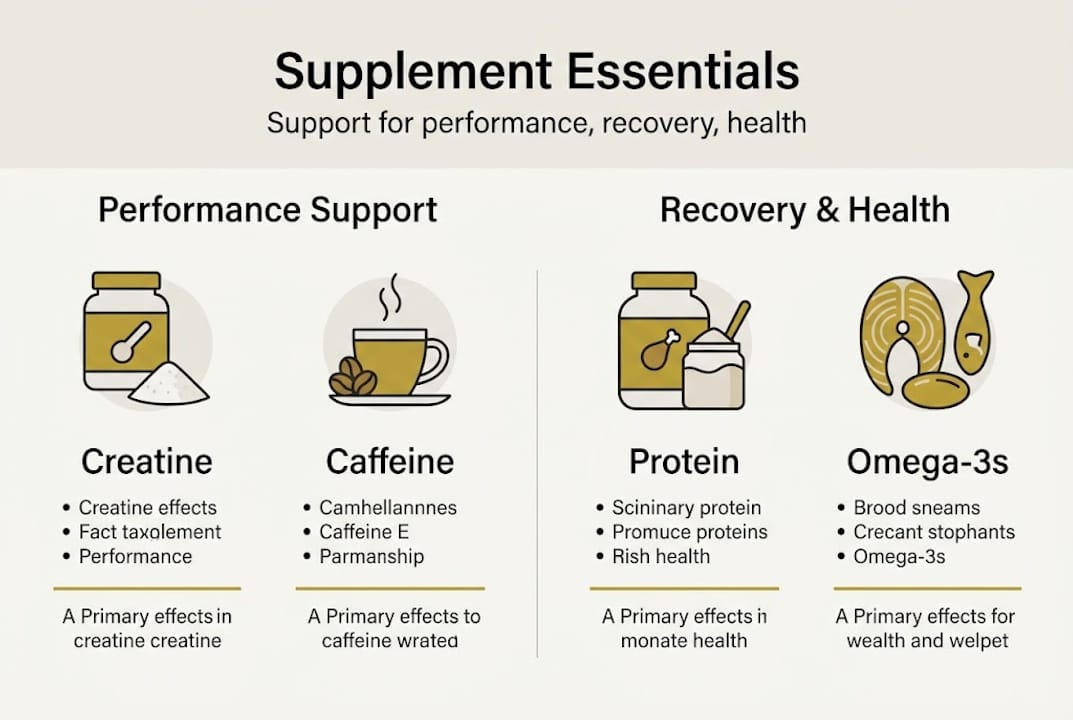
Omega-3 fatty acids reduce inflammation and support joint health and recovery, while antioxidants such as tart cherry extract help mitigate oxidative stress after intense exercise. Both are particularly relevant for athletes training at high frequency, where cumulative inflammation can blunt adaptation and increase injury risk.
Key benefits of omega-3s and antioxidants for athletes:
- Reduced delayed onset muscle soreness (DOMS) after heavy sessions
- Lower systemic inflammation markers, supporting faster return to training
- Improved joint lubrication and reduced stiffness, especially in endurance athletes
- Enhanced immune function during periods of heavy training load
- Protection against exercise-induced oxidative damage to muscle cells
The adoption rates among elite athletes speak volumes. Creatine and caffeine see over 90% usage amongst competitive athletes, but omega-3 supplementation is increasingly standard practice in professional sport as well. For omega-3 and athlete recovery, fish oil capsules providing at least 1g of combined EPA and DHA daily represent a practical and well-evidenced starting point. Tart cherry juice or concentrate taken in the 48 hours following intense training is a simple, food-derived antioxidant strategy worth trialling.
Choosing, using and personalising your supplementation
Knowing the science is one thing. Translating it into a practical, personalised routine that actually fits your training, diet, and lifestyle is where the real gains emerge. Most people either do too little, expecting no results, or too much, stacking products without clear rationale.
Follow these steps to build a sensible supplementation approach:
- Consult a professional: a registered dietitian or sports nutritionist can identify genuine gaps in your diet and training nutrition
- Assess your needs: match supplements to your specific goals, whether that is endurance, strength, recovery, or general health
- Verify quality: look for products with third-party testing certifications to ensure purity and accurate labelling
- Trial in training: never introduce a new supplement for the first time on race day or competition day
- Monitor and adjust: keep a simple log of energy, recovery quality, and performance markers over four to six weeks
Efficacy varies by sport and individual, with factors like gender, training status, and dosing timing all influencing outcomes. Women remain significantly understudied in supplement research, which means female athletes should be especially cautious about extrapolating male-centric data to their own use. Reviewing supplement safety tips before starting any new product is always a sensible first step.
For those looking to maximise results, supplement stacking advice can help you identify which combinations offer multi-pathway benefits. A well-balanced diet meets most needs, with supplements providing marginal gains of roughly 1 to 3% for already well-nourished athletes. That margin matters at a high level, but it is not a substitute for solid nutritional foundations.
Pro Tip: Food first, always. Supplements are most effective when your diet is already dialled in. Using them to compensate for poor eating habits will deliver disappointing results.
Why food first, supplement smart is the most effective approach
There is a persistent belief in athletic circles that more supplements equal better results. Walk into any gym and you will find people spending heavily on stacks they barely understand, hoping the products will do the work that training and nutrition should. We see this constantly, and it is worth being direct about it.
The evidence is clear that a well-balanced diet meets most needs, with supplements delivering only marginal gains for athletes who are already eating well. That does not mean supplements are useless. It means they are precision tools, not foundations. Creatine works brilliantly for high-intensity athletes. Omega-3s genuinely reduce inflammation. But neither will rescue a diet built on convenience food and inconsistent training.
The smartest approach is to build your dietary habits first, then layer in targeted supplementation where genuine gaps exist. Self-experimentation matters here. Track your response, adjust your dosing, and revisit your choices every few months. The whole-food approach to wellness is not anti-supplement. It is pro-results. Overhype and misuse are the biggest pitfalls in this space, and avoiding them is what separates athletes who progress from those who plateau.
Take the next step towards optimised recovery and performance
If you have read this far, you already think about your supplementation more carefully than most. Applying these principles with high-quality, evidence-backed products is the logical next step.
At Elevate Supplements, we stock a curated range built for athletes and active individuals across the UK and Ireland. Whether you are starting with a targeted stack or looking for a specific product, our PERFORM & RECOVERY STACK is an ideal entry point for those serious about performance and recovery. For connective tissue and post-training support, RECUPERATION SUPPORT offers a specialised option worth exploring. Browse our full supplement range for further guidance, with free UK and Ireland delivery on orders over £100.
Frequently asked questions
Can wellness supplements replace a balanced diet?
No, supplements are intended to support, not replace, a balanced diet and should only fill specific nutritional gaps that food alone cannot address.
What are the most effective supplements for athletic performance?
Creatine, caffeine, protein, omega-3s, and antioxidants show the strongest evidence for improving athletic performance and recovery, with creatine and caffeine particularly well-supported across multiple sport types.
How can I determine if a supplement is right for me?
Consult a registered dietitian, start with evidence-based choices suited to your sport, and monitor your response over four to six weeks, as efficacy varies by individual and training context.
Are omega-3 and antioxidant supplements necessary for athletes?
Omega-3s and antioxidants can meaningfully reduce exercise-induced inflammation and support faster recovery, but their necessity depends on your diet, training frequency, and individual health status.
Recommended
- Role of Supplements in Wellness: Performance and Recovery – ElevateSupplements
- Sports supplementation: boost performance, recovery and wellness – ElevateSupplements
- Recovery supplementation: key benefits, timing & evidence – ElevateSupplements
- How to Choose Supplements for Peak Performance Results – ElevateSupplements
- Harnessing Positive Frequencies For Enhanced Well-Being And Energy


