


Most athletes assume that buying the right supplement will fast-track their results. It won’t. Sports supplements are tools, not shortcuts, and the difference between using them strategically and wasting money comes down to understanding the evidence. This guide cuts through the noise to show you exactly what sports supplementation means, which products have genuine science behind them, and how to apply that knowledge safely whether you’re training in Belfast, Bristol, or anywhere in between.
Table of Contents
- What is sports supplementation?
- The main types of sports supplements
- Which sports supplements actually work?
- Risks, side effects and safety concerns
- Who benefits (and who may not)? Key considerations
- How to evaluate and select quality supplements
- Finding trusted supplements to support your goals
- Frequently asked questions
Key Takeaways
| Point | Details |
|---|---|
| Supplements are tools | They can help performance or recovery but are not shortcuts or substitutes for healthy eating. |
| Evidence matters | Only a few supplements have strong support from scientific studies for real benefits. |
| Quality and safety | Always look for reputable testing and certification when choosing supplements. |
| Personalisation is key | Benefits depend on your sport, training, and individual factors—one size does not fit all. |
What is sports supplementation?
Sports supplementation isn’t about replacing meals or compensating for poor training habits. It means adding specific nutrients or compounds to your regular diet with a clear, measurable goal in mind. That goal might be improving power output, speeding up recovery between sessions, or addressing a nutritional gap that your everyday food simply can’t fill.
Supplements arrive in many forms: powders, capsules, tablets, drinks, gels, and bars. The active ingredients span a wide range too, from vitamins and minerals to amino acids, herbal extracts, and highly specific compounds like creatine or beta-alanine. Understanding the role of supplements in wellness helps you see them as one part of a larger performance picture, not the whole story.
Here’s what sports supplementation typically targets:
- Enhanced exercise performance (power, speed, endurance)
- Faster recovery (reduced muscle soreness, improved repair)
- Better overall health (immune function, bone density, hormonal balance)
- Addressing dietary deficiencies (iron, vitamin D, omega-3 for plant-based athletes)
“Sports supplementation is the intentional use of supplements to augment the habitual diet for performance, recovery or health.” — NIH Office of Dietary Supplements
The main types of sports supplements
Athletes use supplements for very different reasons, and grouping them by purpose makes it far easier to decide what’s relevant to you. Recognised categories include performance enhancers, recovery aids, sports foods, and nutrient supplements.
| Category | Purpose | Common examples |
|---|---|---|
| Performance enhancers | Improve output during training or competition | Creatine, caffeine, beta-alanine, nitrate |
| Recovery aids | Speed repair and reduce soreness post-session | Whey protein, BCAAs, probiotics |
| Sports foods | Convenient fuel during or around exercise | Energy gels, bars, electrolyte drinks |
| Nutrient supplements | Address deficiencies affecting performance | Vitamin D, iron, omega-3, magnesium |
Each category serves a distinct function. Performance enhancers work during the session itself. Recovery aids do their job in the hours and days after. Sports foods are essentially convenient nutrition. Nutrient supplements are most relevant when blood tests or dietary analysis reveal a genuine shortfall.

Understanding supplement quality for athletes matters across every category, because a poorly manufactured product in any of these groups can underdeliver or, worse, cause harm. Equally, knowing which recovery supplements for athletes are worth your investment separates smart training from expensive guesswork.
Which sports supplements actually work?
This is the question every athlete wants answered honestly. The evidence is clear on a handful of supplements and far less convincing on many others.
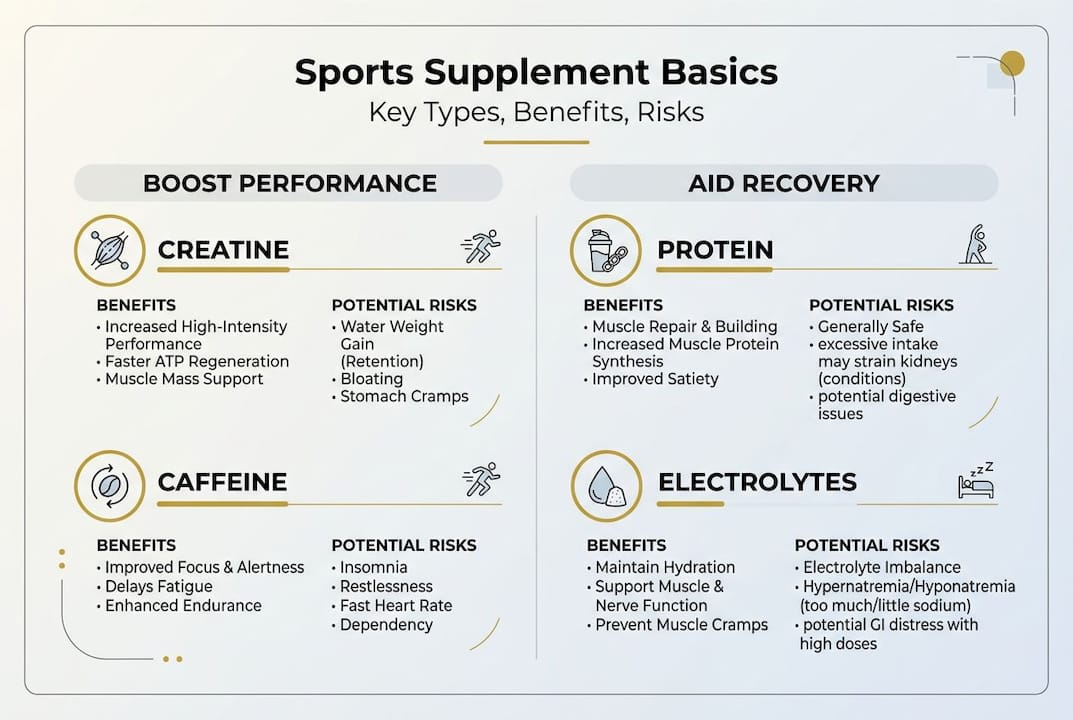
| Supplement | Proven benefit | Evidence strength |
|---|---|---|
| Creatine | 3-5% increase in high-intensity power | Very strong |
| Caffeine | Consistent endurance and alertness gains at 3-6mg/kg | Very strong |
| Protein | Best-documented for strength and recovery (SUCRA 99.6%) | Very strong |
| Beta-alanine | Useful for repeated sprints; sport-specific | Moderate |
| BCAAs | Modest recovery support when protein intake is adequate | Moderate |
| Most others | Little to no proven performance impact | Weak or absent |
Creatine, caffeine, and protein consistently top the evidence rankings. Creatine boosts high-intensity power output, caffeine sharpens endurance and focus, and protein remains the gold standard for muscle repair and growth. Harvard sports supplement findings echo this, noting that the gap between the top-tier supplements and the rest is significant.
Beta-alanine is worth considering if your sport involves repeated short bursts of effort, such as rugby, boxing, or interval training. It works by buffering acid build-up in muscles, which delays fatigue during those efforts specifically.
“Protein supplementation showed the highest SUCRA score of 99.6%, making it the most consistently effective supplement for strength and recovery outcomes.”
Pro Tip: Introduce one evidence-based supplement at a time and test it during training, never on competition day. This gives you accurate feedback on what’s actually working for your body.
Knowing how to stack supplements for performance comes later, once you’ve established your baseline with individual products. Always prioritise clean supplements for athletes to ensure what’s on the label is what’s in the product.
Risks, side effects and safety concerns
Supplements are not regulated as strictly as medicines in the UK or Ireland. That gap creates real risks, including contamination with banned substances, inaccurate labelling, and products that simply don’t contain what they claim.
Key risks to be aware of:
- Contamination: Some products contain undeclared stimulants or anabolic agents, which can trigger a failed drugs test even if you had no intention of cheating.
- Toxicity: Excess fat-soluble vitamins (A, D, E, K) accumulate in the body and can cause harm at high doses.
- Drug interactions: Certain supplements interact with medications, including blood thinners and antidepressants.
- Inefficacy: Many products are simply overpriced and ineffective, wasting your money without any benefit.
The NHS food-first approach is clear: prioritise diet before supplements, and only add supplements when there’s an assessed need. When you do use them, look for Informed Sport batch-testing certification on the label. This independent programme tests products for over 250 banned substances.
Pro Tip: Check GB Boxing nutrition guidance for a practical example of how elite sports bodies approach supplement safety. Their framework applies well beyond boxing.
For more on staying safe, our supplement safety expert tips and guidance on quality matters for athletes are worth reading before you buy anything new.
Who benefits (and who may not)? Key considerations
Not every supplement benefits every athlete equally. Effectiveness varies based on age, fitness level, diet, sex, and the specific demands of your sport. A marathon runner and a powerlifter have very different needs, and the same supplement can produce very different results in each.
Consider these factors before committing to any supplement:
- Your training age: Beginners often see greater gains from improved nutrition and training alone, before supplements add meaningful value.
- Your diet: Vegetarians and vegans may genuinely benefit from creatine, iron, or vitamin B12 supplementation due to lower dietary intake.
- Your sport: Power and sprint athletes benefit most from creatine. Endurance athletes gain more from caffeine and iron management.
- Your sex: Women have distinct hormonal and physiological considerations, and the research base for female athletes is still catching up.
- Your health baseline: Blood tests can reveal deficiencies that make certain supplements genuinely necessary rather than optional.
“Many supplements remain unproven and may not help everyone. Individual factors including age, fitness, diet, sex, and sport all influence outcomes significantly.”
Youth athletes deserve particular caution. The evidence base for supplementation in under-18s is thin, and most sports governing bodies recommend against it outside of basic nutrient support. For those returning from injury or managing high training loads, natural recovery supplements can offer a gentler starting point.
How to evaluate and select quality supplements
Knowing what to look for when buying supplements protects both your health and your wallet. The market is crowded with products that make bold claims backed by little evidence.
Follow these steps before purchasing:
- Check for batch-testing certification. Look for Informed Sport or Informed Choice logos. These confirm the product has been independently tested for banned substances.
- Read the full ingredient list. Avoid products using proprietary blends that hide individual ingredient doses behind vague labels.
- Review the evidence. Use the NIH supplement database to check whether the active ingredient has genuine research support.
- Buy from reputable sources. Clear labelling, transparent sourcing, and verifiable contact details are minimum standards.
- Follow NHS guidance. The NHS food supplements advice provides a reliable framework for assessing need and managing risk.
Additional things to watch for:
- Unrealistic claims: No supplement legally or safely produces dramatic results in days.
- Missing dosage information: Effective supplements list exact amounts per serving.
- No third-party testing: If a brand can’t confirm independent testing, treat it with scepticism.
Pro Tip: Avoid introducing more than one new supplement at a time. If you change three things simultaneously and something goes wrong, or right, you won’t know which product was responsible.
Our guide on choosing supplements for performance walks you through this process in more detail with sport-specific recommendations.
Finding trusted supplements to support your goals
Armed with this information, you’re ready to choose high-quality supplements tailored to your needs. At Elevate Supplements, we stock products built around the same evidence-based principles covered in this guide. Every product in our range comes with clear ingredient labelling, transparent dosing, and options that meet the quality standards UK and Ireland athletes should expect.
Whether you’re looking to build strength with creatine monohydrate, accelerate recovery with whey protein, or explore our full sports supplements shop, you’ll find products that match your goals without the guesswork. We offer fast delivery across the UK and Ireland, free shipping on orders over £100, and 24/7 customer support to help you make the right call every time.
Frequently asked questions
Is sports supplementation necessary if I already eat a balanced diet?
For most people, a well-balanced diet covers all nutritional needs, but targeted supplements may help close specific gaps or support unusually high training demands that food alone can’t meet.
What is the safest way to start using sports supplements?
Begin with a single evidence-based supplement, trial it during training rather than competition, and always choose products with Informed Sport certification or equivalent batch-testing verification.
Can supplements be used for both endurance and strength sports?
Yes. Caffeine consistently supports endurance performance, while creatine and protein are the top picks for power, strength, and recovery across a wide range of sports.
How can I avoid contaminated or risky supplements?
Always choose products that have been batch-tested by Informed Sport or a comparable independent programme, and never purchase from unverified or unknown sources.
Recommended
- Role of Supplements in Wellness: Performance and Recovery – ElevateSupplements
- Why recovery supplements matter for athletes in 2026 – ElevateSupplements
- Why stack supplements for peak performance and recovery – ElevateSupplements
- Why cycle supplements for performance and recovery in 2026 – ElevateSupplements
- BIO NUTRITION: Testosterone Wellness for Men, 60 tablets - Charming Food’s


