


Many athletes believe a balanced diet alone covers all their recovery needs, but this overlooks how targeted supplementation can dramatically accelerate muscle repair and energy restoration. When training intensity increases or recovery windows shrink, your body’s demands often exceed what whole foods can deliver in time. Recovery supplements bridge this gap by providing precise nutrients exactly when your muscles need them most. Understanding why these supplements matter transforms how quickly you bounce back from tough sessions. This guide reveals the science behind effective recovery supplementation, explains optimal timing strategies, and shows you how to choose supplements that genuinely enhance your performance and training consistency.
Table of Contents
- Key takeaways
- How recovery supplements support your body after exercise
- The importance of timing your recovery supplements
- Key recovery supplements and their benefits
- Tailoring recovery supplements to your individual needs
- Discover targeted recovery supplements at Elevate Supplements
- FAQ
Key Takeaways
| Point | Details |
|---|---|
| Targeted replenishment | Recovery supplements provide precise nutrients to speed glycogen restoration and muscle repair when time to recover is short. |
| Immediate post workout intake | Carbohydrates and protein should be consumed within 30 minutes of finishing to maximise glycogen restoration and muscle protein synthesis. |
| Golden timing window | There is a 30 minute post exercise window when nutrient absorption is highest, so delaying reduces glycogen restoration and protein synthesis. |
| Carbohydrate protein synergy | Combining carbohydrates with protein maximises glycogen restoration and muscle repair within the 24 hour window. |
| Supplement as complement | Supplements should complement good nutrition and rest rather than replacing them. |
How recovery supplements support your body after exercise
Your muscles rely on glycogen as their primary fuel source during training. Hard sessions deplete these stores significantly, leaving you fatigued and vulnerable to performance drops in subsequent workouts. Carbohydrates replenish glycogen stores far more rapidly than your body can restore them through normal meals alone, especially when recovery time is less than 24 hours between sessions.
Protein plays an equally vital role by stimulating muscle protein synthesis, the process your body uses to repair exercise-induced damage. Without adequate protein intake immediately after training, your muscles remain in a breakdown state longer than necessary. Combining carbohydrates with protein creates a synergistic effect that maximises both glycogen restoration and muscle repair within that crucial 24-hour window. This combination reduces muscle soreness, accelerates strength recovery, and prepares your body for the next training stimulus.
Proper recovery directly influences your ability to maintain training quality over time. Athletes who consistently optimise their recovery through strategic supplementation experience fewer injuries, sustain higher training volumes, and achieve progressive overload more reliably. The difference becomes particularly noticeable during intense training blocks or competition phases when your body faces multiple demanding sessions each week.
Pro Tip: Track your perceived recovery quality for two weeks with and without post-workout supplementation to identify your personal response patterns and adjust your strategy accordingly.
The importance of timing your recovery supplements
The 30-minute window immediately following exercise represents your body’s peak state for nutrient absorption and utilisation. During this period, your muscles are primed to shuttle glucose into cells for glycogen restoration and activate protein synthesis pathways. Immediate post-exercise supplementation significantly expedites recovery compared to delayed intake, reducing both muscle soreness and systemic fatigue markers.
Delaying your supplement intake beyond this golden window diminishes the effectiveness of both glycogen restoration and protein synthesis. Your body’s insulin sensitivity peaks immediately after exercise, making this the optimal time for carbohydrate absorption. As hours pass, this sensitivity decreases, meaning the same amount of carbohydrate delivers progressively less glycogen restoration benefit. Similarly, muscle protein synthesis rates remain elevated for several hours post-exercise but peak within the first 30 minutes.
Establishing a consistent post-workout supplement routine eliminates guesswork and ensures you capture this optimal timing window reliably:
- Prepare your recovery shake or supplement mix before training so it’s ready immediately when you finish
- Consume 20-40g of fast-digesting protein and 40-80g of carbohydrates within 30 minutes of completing your session
- Follow up with a balanced whole-food meal 60-90 minutes later to sustain recovery processes throughout the day
- Adjust ratios based on session intensity: higher carbohydrate ratios after glycolytic work, higher protein after strength-focused training
Pro Tip: For early morning sessions, prepare a portable recovery drink the night before and store it in your gym bag to ensure you never miss the timing window.
“The metabolic window for optimal nutrient uptake is real and significant. Athletes who consistently hit this timing window demonstrate measurably faster recovery markers and superior training adaptations over time.”
Key recovery supplements and their benefits
Different recovery supplements target specific physiological processes, making it essential to understand which ones align with your training demands and recovery goals. The table below summarises the primary recovery supplements backed by substantial research evidence:
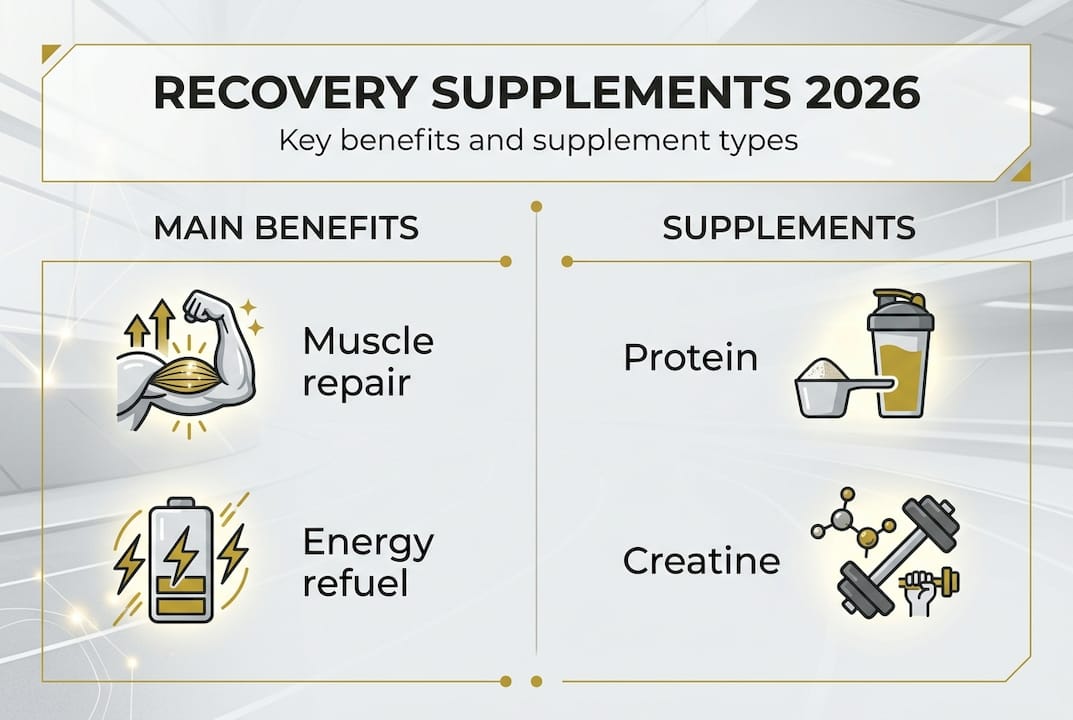
| Supplement | Primary benefit | Recommended dosage | Optimal timing |
|---|---|---|---|
| BCAAs | Reduces muscle inflammation and soreness via mTOR pathway activation | 5-10g per serving | Immediately post-exercise or during extended sessions |
| Creatine | Enhances glycogen synthesis and reduces fatigue over 8-12 weeks | 3-5g daily | Consistent daily timing, often post-workout |
| Omega-3 fatty acids | Lowers inflammatory markers and supports recovery during injury | 2-3g EPA+DHA daily | With meals for optimal absorption |
Branched-chain amino acids stand out for endurance athletes because they reduce muscle inflammation markers and activate mTOR, a critical signalling pathway for muscle repair. This makes BCAAs particularly valuable during high-volume training phases when muscle damage accumulates faster than your body can naturally repair it. The leucine component specifically triggers protein synthesis, whilst isoleucine and valine support energy production during prolonged exercise.
Creatine offers benefits extending beyond its well-known strength gains. Research shows creatine enhances glycogen synthesis and reduces muscle soreness markers when used consistently over 8-12 weeks. This long-term supplementation approach means you’re building a reservoir of recovery support rather than relying on acute effects. Athletes who maintain consistent creatine supplementation report improved workout-to-workout recovery and sustained strength levels even during intense training blocks.

Omega-3 fatty acids provide anti-inflammatory benefits that become crucial during injury recovery or periods of immobilisation. Studies demonstrate omega-3s reduce inflammation markers and muscle damage indicators, supporting faster tissue repair. These effects prove especially valuable for athletes managing chronic inflammation or recovering from acute injuries whilst trying to maintain fitness levels.
Practical dosage considerations for maximising recovery benefits:
- Start with evidence-based doses rather than megadosing: more isn’t always better and can waste money or cause digestive discomfort
- Split BCAA doses between during-workout and post-workout consumption for extended training sessions exceeding 90 minutes
- Load creatine with 20g daily for 5-7 days only if you need rapid saturation; otherwise, 3-5g daily achieves the same endpoint within 3-4 weeks
- Choose omega-3 supplements with high EPA and DHA concentrations to minimise pill burden whilst meeting therapeutic doses
Pro Tip: Cycle your supplement focus based on training phases: emphasise BCAAs during high-volume blocks, increase omega-3s during taper or recovery weeks, and maintain creatine consistently year-round for cumulative benefits.
Tailoring recovery supplements to your individual needs
Your personal characteristics significantly influence how effectively recovery supplements work for you. Sex differences create distinct supplementation needs: female athletes may benefit from creatine during luteal phases when fatigue naturally increases, whilst male athletes typically respond more predictably to standard dosing protocols throughout their training cycles. Hormonal fluctuations in women affect both energy availability and recovery capacity, making strategic supplement timing even more critical.
Injury recovery demands adjusted supplementation strategies compared to normal training. Protein requirements increase substantially during injury rehabilitation, often reaching 2.0-2.5g per kilogramme of body weight daily to support tissue repair and prevent muscle atrophy. Simultaneously, anti-inflammatory supplements like omega-3s take on greater importance for managing inflammation and supporting healing processes. Athletes returning from injury should gradually reintroduce performance supplements as training intensity rebuilds.
Key individual factors influencing your supplement strategy:
- Existing micronutrient deficiencies amplify or diminish supplement effectiveness: iron deficiency blunts training adaptations regardless of recovery supplement quality
- Age affects protein synthesis rates, with older athletes often requiring higher protein doses to achieve the same muscle protein synthesis response as younger counterparts
- Training history determines your body’s adaptive capacity: newer athletes often respond dramatically to basic supplementation, whilst veterans need more sophisticated strategies
- Dietary restrictions or preferences may create gaps that supplements must fill: plant-based athletes particularly benefit from creatine and specific amino acid supplementation
Supplements amplify recovery but never compensate for inadequate sleep, poor nutrition quality, or excessive training loads. View them as performance enhancers that work best when your recovery fundamentals are already solid. An athlete sleeping five hours nightly won’t recover optimally regardless of supplement quality, whilst someone prioritising eight hours of sleep will extract maximum benefit from strategic supplementation.
Pro Tip: Test new supplements during training phases rather than competition weeks to assess your individual response without risking unexpected reactions during important events.
“Successful recovery supplementation requires honest assessment of your individual needs, training demands, and lifestyle factors. Cookie-cutter approaches rarely deliver optimal results for serious athletes.”
Discover targeted recovery supplements at Elevate Supplements
Your recovery strategy deserves supplements formulated specifically for athletic demands. Elevate Supplements offers research-backed products designed to accelerate muscle repair and restore energy levels efficiently. Our vanilla whey protein delivers fast-absorbing protein perfect for that critical post-workout window, whilst our pure micronised creatine monohydrate supports both glycogen restoration and strength recovery. For comprehensive amino acid coverage, our essential amino acids supplements provide all nine essential aminos your muscles need for optimal protein synthesis.
Every product undergoes rigorous quality testing to ensure purity and potency. We understand that athletes need reliable supplements they can trust during intense training blocks and competition phases. Explore our complete recovery range to build a personalised supplement stack that matches your specific training demands and recovery goals.
FAQ
When is the best time to take recovery supplements?
The optimal window is within 30 minutes after completing your training session when your muscles are most receptive to nutrient uptake. This timing maximises both glycogen restoration and muscle protein synthesis rates. For extended training sessions exceeding 90 minutes, consuming BCAAs during exercise provides additional recovery support.
Are recovery supplements necessary if I have a balanced diet?
A balanced diet provides foundational nutrition, but supplements become valuable when recovery windows are tight or training intensity is high. When you have less than 24 hours between sessions, supplements deliver nutrients faster and more precisely than whole foods alone. They’re particularly beneficial during intense training blocks when your body’s demands exceed what normal meals can provide in the required timeframe.
Can women and men use the same recovery supplements?
Most recovery supplements work effectively for both sexes, though optimal timing and dosing may differ. Women may benefit from adjusting supplement intake around menstrual cycle phases, particularly increasing creatine during the luteal phase when fatigue naturally rises. Both sexes should focus on meeting individual protein requirements based on body weight and training intensity rather than following generic recommendations.
What are the risks of overusing recovery supplements?
Excessive supplementation wastes money and can cause digestive discomfort without providing additional recovery benefits. Megadosing protein beyond your body’s synthesis capacity simply gets oxidised for energy or excreted. Stick to evidence-based doses and recognise that supplements amplify good recovery practices rather than compensate for poor fundamentals like inadequate sleep or excessive training volume.
How do I know if a recovery supplement is high quality?
Look for products that provide transparent ingredient lists, third-party testing certificates, and clear dosage information. High-quality supplements specify exact amounts of active ingredients rather than hiding behind proprietary blends. Reputable brands invest in purity testing to ensure their products are free from contaminants and contain the stated amounts of key nutrients.
Recommended
- Recovery supplements to boost muscle repair in 2026 – ElevateSupplements
- Why supplement quality matters for athletes in 2026 – ElevateSupplements
- Why cycle supplements for performance and recovery in 2026 – ElevateSupplements
- Natural Supplements Cut Recovery Time by 25%: Full Guide – ElevateSupplements
- Top workout accessories for training efficiency and recovery – Armageddon Sports


