


You’ve likely heard conflicting claims about multivitamins: they’re essential, they’re pointless, they’re dangerous. The truth sits somewhere in between. Multivitamins aren’t miracle cures, but when used properly, they can meaningfully support your health and fitness goals. This article cuts through the confusion to explain what multivitamins actually are, how they work in your body, who benefits most from them, and how to use them strategically to enhance your wellness and performance without falling into common traps.
Table of Contents
- Key takeaways
- Understanding what multivitamins are
- How multivitamins support health and fitness performance
- Considerations, risks and nuanced insights on multivitamin use
- Practical guidance for using multivitamins to enhance wellness and fitness
- Explore Elevate Supplements to support your performance
- What are multivitamins FAQ
Key Takeaways
| Point | Details |
|---|---|
| Balanced diet first | Prioritising a balanced diet remains the best approach, with multivitamins filling confirmed gaps. |
| Use with purpose | Multivitamins can meaningfully support health and fitness goals when used properly, not as miracle cures. |
| Avoid excess intake | Excessive intake can be toxic and may blunt training benefits. |
| Read labels carefully | Always check the daily value percentages and beware nutrient overlap to avoid unintended overdosing. |
| B vitamins for energy | B vitamins support energy metabolism and can improve endurance while reducing perceived fatigue during training. |
Understanding what multivitamins are
Multivitamins are dietary supplements containing combinations of vitamins and often minerals designed to supplement your daily intake. There’s no standard formula. Different products vary wildly in their composition, dosages, and intended purposes.
Most basic multivitamins deliver between 50% and 150% of the recommended daily allowance for key nutrients. Some go far beyond this, entering megavitamin territory with doses exceeding 1000% of daily requirements. These high-potency formulas target specific health concerns or populations with elevated needs.
For fitness enthusiasts, specialised athletic multivitamins have emerged. These formulas typically emphasise B-vitamins for energy metabolism, antioxidants like vitamins C and E to combat exercise-induced oxidative stress, and minerals such as zinc and magnesium that support recovery. Understanding what’s actually in your multivitamin matters enormously. Many people take multiple supplements without realising they’re getting overlapping nutrients, potentially pushing intake into dangerous territory.
The composition varies so much that you might find:
- Basic formulas with 10 to 15 essential vitamins and minerals at modest doses
- Comprehensive blends with 30 or more ingredients including herbs and amino acids
- Gender-specific formulas adjusted for male or female nutritional needs
- Age-targeted products with higher doses of nutrients like vitamin D and calcium for older adults
- Performance-focused supplements with added ingredients like creatine or beta-alanine
This variety creates both opportunity and confusion. You can find a formula matched to your specific needs, but you must read labels carefully. Check the percentage of daily value for each nutrient, particularly fat-soluble vitamins A, D, E, and K, which accumulate in body tissues. Following supplement safety guidelines helps you avoid unintentional overdosing whilst maximising benefits.
How multivitamins support health and fitness performance
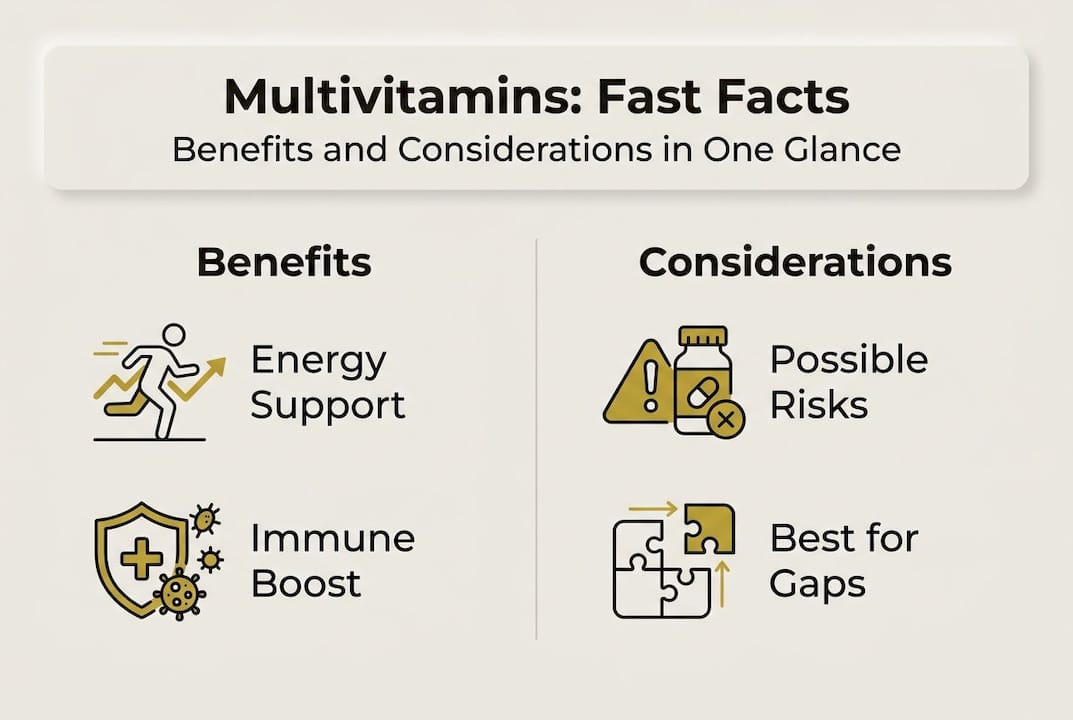
Your body requires vitamins and minerals for thousands of biochemical reactions. These micronutrients don’t provide energy directly, but they enable the metabolic pathways that extract energy from food. Vitamins function as coenzymes in energy production, support immune regulation, provide antioxidant protection, and facilitate cellular repair.

For physically active individuals, these functions take on heightened importance. Training increases metabolic demands, generates oxidative stress, causes muscle damage requiring repair, and challenges immune function. Each of these processes depends on adequate micronutrient availability.
Consider the B-vitamin complex. Thiamine, riboflavin, niacin, pantothenic acid, and biotin all participate in converting carbohydrates, fats, and proteins into ATP, your cells’ energy currency. Research shows B-vitamins improve exercise endurance and reduce perceived fatigue during training. Vitamin B12 and folate support red blood cell production, directly impacting oxygen delivery to working muscles.
Antioxidant vitamins combat the free radicals generated during intense exercise. Vitamin C protects cells from oxidative damage, supports collagen synthesis for connective tissue health, and enhances immune function. Vitamin E guards cell membranes against lipid peroxidation. Together, these antioxidants help manage the inflammatory response to training, potentially speeding recovery.
Vitamin D deserves special attention. Beyond its role in bone health, vitamin D modulates immune function, which matters enormously for athletes who can’t afford frequent illness disrupting training. Studies link adequate vitamin D status to improved muscle function and reduced injury risk.
Here’s how strategic multivitamin use supports your fitness goals:
- Filling dietary gaps that emerge from restricted eating patterns or food preferences
- Supporting energy metabolism during periods of increased training volume or intensity
- Providing antioxidant protection against exercise-induced oxidative stress
- Maintaining immune function during heavy training blocks when illness risk rises
- Ensuring adequate micronutrient status for optimal recovery and adaptation
Pro Tip: Time your multivitamin with a meal containing some dietary fat. Fat-soluble vitamins A, D, E, and K absorb much better when consumed with fat, maximising the benefit you get from supplementation.
The advantages of targeted vitamin supplementation become most apparent when dietary intake falls short of needs. If you’re eating a varied, nutrient-dense diet with plenty of fruits, vegetables, whole grains, and quality protein, you may already meet most micronutrient requirements. But if you restrict calories for body composition goals, follow a plant-based diet, or simply struggle to eat enough variety, strategic supplementation bridges the gap. Understanding supplements’ role in overall wellness helps you integrate them effectively into your health strategy.
Considerations, risks and nuanced insights on multivitamin use
Multivitamins aren’t universally beneficial. They help specific populations whilst offering minimal benefit or even potential harm to others. Understanding who benefits most, what risks exist, and what the research actually shows allows you to make informed decisions.
Multivitamins provide the greatest benefit to:
- People with documented nutrient deficiencies from blood tests
- Individuals following restrictive diets that limit food variety
- Older adults with reduced nutrient absorption or increased needs
- Pregnant women requiring higher intakes of folate and iron
- Athletes with elevated nutritional demands from intense training
For healthy individuals eating balanced diets, evidence of benefit remains weak. Large-scale studies show mixed results regarding cardiovascular disease prevention, cancer risk reduction, and mortality. Some research suggests modest cognitive benefits in older adults, but findings aren’t consistent enough to recommend universal supplementation.
The risks deserve serious consideration. Fat-soluble vitamins accumulate in body tissues, making toxicity possible with chronic excessive intake. Vitamin A toxicity causes liver damage, bone problems, and birth defects. Too much vitamin D leads to calcium imbalances and kidney damage. High-dose vitamin E may increase bleeding risk and interfere with blood clotting.
For athletes specifically, excessive antioxidant supplementation might actually impair training adaptations. Exercise generates controlled oxidative stress that signals your body to adapt and grow stronger. Flooding your system with massive antioxidant doses could blunt this signalling, potentially reducing the gains you’d otherwise achieve from training.
| Factor | Benefits | Risks | Who should consider |
|---|---|---|---|
| Micronutrient status | Fills dietary gaps | Potential toxicity from excess | Those with restricted diets or confirmed deficiencies |
| Athletic performance | Supports energy and recovery | May impair adaptations if overdosed | Athletes with inadequate dietary intake |
| Long-term health | Possible cognitive benefits | Mixed disease prevention evidence | Older adults, specific risk groups |
| Cost and convenience | Easy nutritional insurance | False security replacing diet quality | Busy individuals struggling with nutrition |
Pro Tip: If you take a multivitamin, avoid additional single-nutrient supplements unless specifically recommended by a healthcare provider. Stacking supplements dramatically increases your risk of exceeding safe upper limits for certain nutrients.
The nuanced reality is that multivitamins work best as targeted tools, not blanket solutions. They complement good nutrition rather than compensating for poor habits. Before adding a multivitamin, honestly assess your diet. Track your intake for a few days using a nutrition app. You might discover you’re already meeting most needs through food, requiring only specific targeted supplementation rather than a comprehensive multivitamin. Following evidence-based safety guidelines ensures you supplement intelligently without unnecessary risk.
Practical guidance for using multivitamins to enhance wellness and fitness
Applying this knowledge requires a strategic, personalised approach. Here’s how to use multivitamins effectively to support your health and performance goals.
-
Assess your actual nutritional status before supplementing. Track your food intake for three to five days using a detailed nutrition app. Compare your vitamin and mineral intake against recommended values. Consider getting blood work to identify true deficiencies rather than guessing.
-
Choose quality products from reputable manufacturers. Look for third-party testing certifications from organisations like Informed Sport or NSF Certified for Sport. These verify that products contain what labels claim without contamination from banned substances. Supplement quality matters enormously, especially for athletes subject to drug testing.
-
Select formulas matched to your specific needs and goals. If you’re a strength athlete, prioritise products with adequate B-vitamins, vitamin D, and minerals like zinc and magnesium. Endurance athletes benefit from formulas emphasising iron, B12, and antioxidants. Don’t just grab whatever’s cheapest or most heavily marketed.
-
Avoid megadoses unless specifically indicated. More isn’t better with micronutrients. Stick to products providing roughly 100% of daily values for most nutrients, with higher amounts only for vitamins commonly deficient in your population, such as vitamin D in the UK.
-
Take your multivitamin consistently with food to maximise absorption and minimise stomach upset. Morning with breakfast works well for most people, creating a reliable routine you’ll maintain long-term.
-
Reassess every few months. Your nutritional needs change with training phases, diet modifications, and life circumstances. What made sense during a heavy training block might be excessive during a recovery period. Periodically evaluate whether you still need supplementation or if you’ve improved your diet enough to reduce reliance on supplements.
Research consistently emphasises prioritising whole food sources first, using supplements only to address confirmed gaps. Focus particularly on B-complex vitamins for energy metabolism, vitamin C for immune support and recovery, vitamin D for immune and musculoskeletal health, and vitamin E for antioxidant protection. These nutrients support athletic performance when dietary intake proves insufficient.
Pro Tip: If you train in the early morning before eating, take your multivitamin with your post-workout meal instead. You’ll absorb nutrients better with food in your stomach, and the B-vitamins won’t cause the nausea some people experience when taking supplements on an empty stomach.
Consider products like the Elevate Multi Vitamin, specifically formulated for active individuals. Such targeted formulas account for the elevated demands of training whilst avoiding excessive doses that could cause problems. Integrate multivitamins into a comprehensive wellness strategy that includes quality nutrition, adequate sleep, stress management, and progressive training. Supplements enhance a solid foundation but never replace it.
Explore Elevate Supplements to support your performance
Now that you understand how multivitamins work and how to use them strategically, you’re ready to explore products designed specifically for health-conscious, active individuals like you. Elevate Supplements offers premium formulations that complement your training and wellness goals.
The Elevate Multi Vitamin provides comprehensive micronutrient support tailored for fitness enthusiasts. It delivers optimal doses of key vitamins and minerals without excessive amounts that could cause problems. For those seeking complete performance support, the Perform & Recovery Stack combines targeted micronutrient supplementation with performance-enhancing ingredients that work synergistically to boost training results and speed recovery. Explore the full range of trusted, quality-tested supplements at ElevateSupplements, where you’ll find products backed by science and designed for real results.
What are multivitamins FAQ
Are multivitamins necessary if I eat a balanced diet?
For most people eating varied, nutrient-dense diets, multivitamins provide minimal additional benefit. However, if you restrict calories, follow a plant-based diet, or have documented deficiencies, strategic supplementation fills important gaps. Assess your actual intake before deciding.
Can multivitamins improve my workout performance?
Multivitamins support performance when dietary intake of key nutrients falls short, particularly B-vitamins for energy metabolism and antioxidants for recovery. They won’t enhance performance if you’re already meeting nutritional needs through food. Think of them as filling gaps, not creating advantages beyond optimal status.
What risks exist with taking multivitamins long-term?
The primary risks involve excessive intake of fat-soluble vitamins that accumulate in tissues, potentially causing toxicity. High-dose antioxidants might also blunt training adaptations. Stick to products providing around 100% of daily values and avoid stacking multiple supplements without professional guidance.
How do I choose the right multivitamin for fitness?
Select products specifically formulated for active individuals, with emphasis on B-vitamins, vitamin D, and key minerals like zinc and magnesium. Look for third-party testing certifications to ensure quality and purity. Avoid megadoses and match the formula to your specific training demands and dietary patterns.
Are there signs of multivitamin overdose I should watch for?
Symptoms vary by nutrient but may include nausea, headaches, fatigue, or more serious effects with prolonged excess intake. If you experience unusual symptoms after starting supplementation, discontinue use and consult a healthcare provider. Following supplement safety protocols minimises risk while maximising benefits.


