


You might assume all protein supplements deliver identical results, but amino acids offer distinct advantages for muscle recovery and performance that whole protein sources cannot match. While protein powders break down slowly over hours, individual amino acids enter your bloodstream within minutes, targeting specific metabolic pathways that reduce inflammation and support repair. This guide reveals how essential amino acids work differently from standard protein supplements, when they genuinely enhance athletic performance, and crucially, when they might not deliver the results you expect. You’ll learn evidence-based strategies to integrate amino acids effectively into your training regimen for measurable improvements in recovery and wellness.
Table of Contents
- Understanding Amino Acids And Their Role In Fitness
- How Amino Acids Improve Muscle Recovery And Reduce Inflammation
- When Amino Acids May Not Enhance Muscle Mass Or Strength Significantly
- Practical Guide To Using Amino Acids For Performance And Wellness
- Elevate Your Fitness With Premium Amino Acid Supplements
- FAQ
Key takeaways
| Point | Details |
|---|---|
| Inflammation reduction | Amino acids modulate inflammatory pathways, lowering recovery time after intense endurance training |
| Performance timing matters | Supplementation effects vary significantly based on workout timing, sex, and sport level |
| Age-dependent benefits | Young healthy adults see limited muscle mass gains, whilst older individuals experience substantial improvements |
| Dosage precision | Effective BCAA supplementation ranges from 5-20g daily for endurance athletes |
| Quality considerations | Supplement purity and amino acid profiles determine actual bioavailability and effectiveness |
Understanding amino acids and their role in fitness
Amino acids are the building blocks of protein vital for muscle synthesis and repair. Your body uses 20 different amino acids to construct proteins that form muscle tissue, enzymes, hormones, and immune cells. Nine of these are essential, meaning your body cannot manufacture them internally and must obtain them through diet or supplementation. The remaining 11 are non-essential because your body can synthesise them from other nutrients when needed.
Branched-chain amino acids (BCAAs) represent a specialised subset consisting of leucine, isoleucine, and valine. These three possess unique molecular structures with branched side chains that allow them to bypass liver metabolism and enter muscle tissue directly. This structural advantage makes BCAAs particularly valuable during and after exercise when muscles require immediate fuel and repair materials. Leucine specifically triggers the mTOR pathway, a critical signalling mechanism that initiates muscle protein synthesis.
Your body relies on a constant supply of essential amino acids to maintain nitrogen balance and prevent muscle breakdown. During intense training, muscle protein degradation accelerates, creating an urgent need for amino acid replenishment. Without adequate intake, your body cannibalises existing muscle tissue to source the amino acids required for vital functions. This catabolic state undermines training adaptations and prolongs recovery periods.
The distinction between whole protein and free-form amino acids matters significantly for athletes. Whole protein sources require 3-4 hours for complete digestion and absorption. Free-form amino acids reach peak blood concentration within 15-30 minutes, providing rapid delivery when timing is critical. This speed advantage explains why many athletes consume amino acids immediately before, during, or after training sessions rather than relying solely on whole food protein sources.
Key amino acid functions include:
- Stimulating muscle protein synthesis through mTOR activation
- Reducing exercise-induced muscle damage and soreness
- Serving as direct fuel sources during prolonged endurance activities
- Supporting immune function during periods of intense training stress
- Maintaining nitrogen balance to prevent muscle catabolism
How amino acids improve muscle recovery and reduce inflammation
BCAAs reduce exercise-induced inflammation by modulating the NF-κB pathway, lowering TNF-α and IL-6, aiding recovery in endurance athletes with dosages of 5-20g daily. The nuclear factor kappa B (NF-κB) pathway controls inflammatory gene expression, and excessive activation following intense exercise prolongs recovery and impairs subsequent performance. BCAA supplementation dampens this inflammatory cascade by reducing pro-inflammatory cytokine production whilst preserving beneficial adaptive responses.

Tumour necrosis factor alpha (TNF-α) and interleukin-6 (IL-6) are inflammatory markers that spike dramatically after exhaustive endurance exercise. Elevated levels correlate with muscle damage, fatigue, and delayed recovery. Studies demonstrate that athletes consuming BCAAs before and after training sessions experience 20-30% lower inflammatory marker concentrations compared to placebo groups. This reduction translates to decreased muscle soreness and faster return to peak performance capacity.
Protein or amino acid supplementation shows small but significant effects on endurance performance depending on timing, sex, and sport level. Meta-analyses reveal that whilst individual effect sizes appear modest (typically 2-5% improvement), these margins prove decisive in competitive athletics. A 3% endurance enhancement might separate podium finishers from mid-pack competitors in events lasting 30-60 minutes.
Timing profoundly influences amino acid effectiveness. Pre-exercise supplementation (30-60 minutes before activity) elevates blood amino acid concentrations during training, reducing muscle breakdown rates. Intra-workout consumption maintains elevated levels throughout prolonged sessions, preventing the decline that typically occurs after 90 minutes of continuous exercise. Post-exercise intake capitalises on the heightened muscle sensitivity to amino acids that persists for 3-4 hours following training cessation.
Sex differences in amino acid metabolism warrant consideration. Female athletes exhibit different hormonal profiles that influence protein turnover rates and recovery kinetics. Research suggests women may derive greater anti-inflammatory benefits from BCAA supplementation during specific menstrual cycle phases when oestrogen levels peak. Male athletes typically respond more predictably across training cycles, though individual variation remains substantial.
Sport-specific factors also determine supplementation efficacy:
- Endurance athletes benefit most from sustained amino acid availability during prolonged efforts
- Strength athletes require higher leucine concentrations to maximise protein synthesis
- Team sport athletes need balanced approaches addressing both endurance and power demands
- Ultra-endurance competitors may require higher dosages (15-20g) to offset extreme muscle breakdown
“The key insight is that amino acid supplementation doesn’t work uniformly across all contexts. Strategic timing aligned with your specific training demands and physiological state determines whether you experience meaningful benefits or waste resources on ineffective protocols.”
Pro Tip: Consume 5-10g of BCAAs in a 2:1:1 ratio (leucine:isoleucine:valine) 30 minutes before high-intensity interval sessions to maximise inflammatory protection whilst preserving training adaptations. Avoid excessive dosages that might blunt beneficial stress responses required for fitness improvements. Check out muscle recovery supplements for comprehensive recovery strategies or explore natural recovery supplements to reduce downtime between training sessions.
When amino acids may not enhance muscle mass or strength significantly
Leucine and BCAA supplements do not significantly enhance muscle mass, strength, or recovery in healthy trained young adults, with benefits more evident in older or anabolic resistant individuals. This finding challenges widespread marketing claims and highlights the importance of matching supplementation strategies to individual physiological contexts. Randomised controlled trials examining young resistance-trained adults (ages 18-35) consistently demonstrate that adding leucine or BCAA supplements to adequate protein intake produces negligible improvements in lean mass accrual or strength gains over 8-12 week training periods.
The explanation centres on protein synthesis ceiling effects. Young healthy individuals already maintain near-maximal muscle protein synthesis rates when consuming sufficient total protein (1.6-2.2g per kilogramme bodyweight daily). Adding isolated amino acids provides no additional stimulus because the limiting factor isn’t amino acid availability but rather the capacity of muscle tissue to utilise available substrates. Your muscles can only synthesise protein at a finite rate determined by genetic factors, training status, and hormonal environment.
Anabolic resistance describes the phenomenon where muscle tissue becomes less responsive to protein and amino acid stimulation. This condition affects older adults (typically over 50), individuals with metabolic dysfunction, and those recovering from injury or illness. In these populations, higher amino acid concentrations are required to achieve the same protein synthesis rates that younger individuals achieve with moderate intake. Supplementation can overcome this resistance by providing supraphysiological amino acid concentrations that compensate for reduced cellular sensitivity.
Key populations who benefit from amino acid supplementation:
- Adults over 50 experiencing age-related anabolic resistance
- Individuals recovering from injury requiring accelerated tissue repair
- Athletes with inadequate total protein intake from whole foods
- People with digestive issues limiting protein absorption
- Vegetarians and vegans struggling to meet leucine requirements from plant sources
The implications for supplement selection are significant. If you’re a young healthy athlete already consuming adequate protein, investing in amino acid supplements specifically for muscle building purposes likely wastes resources. Your money would generate better returns through improved whole food quality, strategic carbohydrate timing, or supplements addressing actual deficiencies like vitamin D or omega-3 fatty acids. However, if you belong to an anabolic resistant population or struggle to meet protein requirements through diet alone, amino acid supplementation becomes considerably more valuable.
| Population | Muscle Mass Benefit | Strength Benefit | Recovery Benefit | Recommended Dosage |
|---|---|---|---|---|
| Young trained adults | Minimal | Minimal | Moderate | 5-10g BCAAs |
| Older adults (50+) | Significant | Moderate | Significant | 10-15g EAAs |
| Injury recovery | Moderate | Limited | Significant | 15-20g EAAs |
| Inadequate protein intake | Significant | Moderate | Significant | 10-15g EAAs |
| Plant-based athletes | Moderate | Moderate | Moderate | 10-15g EAAs |
Pro Tip: Before investing in amino acid supplements, honestly assess your total daily protein intake. Track your consumption for three days using a nutrition app. If you consistently achieve 1.8-2.2g per kilogramme bodyweight from high-quality sources, amino acids won’t meaningfully increase muscle mass or strength. Instead, focus resources on optimising training variables like progressive overload, exercise selection, and recovery protocols. For guidance on making informed choices, review Myprotein alternative supplements or understand why supplement quality matters for athletes.
Practical guide to using amino acids for performance and wellness
Protein and amino acid supplementation effects vary significantly by timing and sport level, emphasising personalised approaches. Generic supplementation protocols ignore individual training demands, metabolic characteristics, and performance goals. Effective amino acid strategies require matching supplement type, dosage, and timing to your specific athletic context and physiological needs.
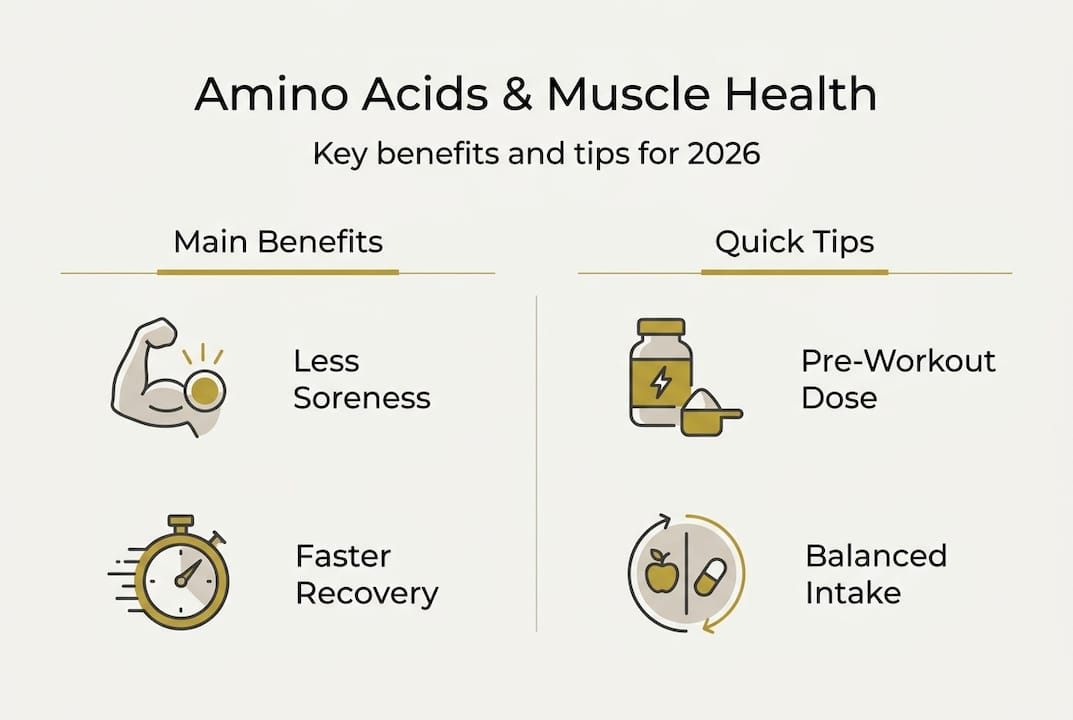
Essential amino acid (EAA) supplements provide all nine essential amino acids in balanced ratios, making them superior to BCAAs alone for muscle protein synthesis. Whilst BCAAs stimulate the mTOR pathway, complete protein synthesis requires all essential amino acids simultaneously. BCAA-only supplements can actually impair protein synthesis if other essential amino acids aren’t available, as the body must break down existing tissue to source missing components. EAA formulations eliminate this limitation by providing complete building blocks.
Glutamine represents the most abundant amino acid in muscle tissue and plays critical roles in immune function, gut health, and nitrogen transport. Intense training depletes glutamine stores by up to 50%, potentially compromising immune function and increasing infection risk. Supplementing 5-10g of glutamine post-workout may support immune resilience during heavy training blocks, though evidence for direct performance benefits remains mixed. Athletes prone to overtraining symptoms or frequent illness may benefit most.
Supplement quality determines actual bioavailability and effectiveness. Third-party testing certifications (Informed Sport, NSF Certified for Sport) verify that products contain stated ingredients without banned substances or contaminants. Manufacturing processes affect amino acid stability and absorption rates. Instantised powders dissolve more completely than cheaper alternatives, improving gastric tolerance and uptake. Tablets and capsules often contain fillers that slow absorption, reducing the rapid delivery advantage that makes amino acids valuable for peri-workout use.
Five-step implementation plan:
- Calculate your total daily protein target based on bodyweight and training volume (1.6-2.2g per kilogramme for most athletes)
- Assess current protein intake from whole foods to identify gaps requiring supplementation
- Select amino acid type based on goals: EAAs for muscle building, BCAAs for endurance and recovery, glutamine for immune support
- Establish timing protocol: pre-workout (30-60 minutes before), intra-workout (during sessions over 90 minutes), post-workout (within 30 minutes after)
- Monitor response over 4-6 weeks, adjusting dosage and timing based on recovery markers, performance metrics, and subjective wellbeing
| Supplement Type | Primary Benefits | Optimal Timing | Typical Dosage | Best For |
|---|---|---|---|---|
| Essential amino acids | Complete protein synthesis, muscle building | Post-workout | 10-15g | Muscle growth, older athletes |
| BCAAs (2:1:1 ratio) | Reduced inflammation, endurance support | Pre/intra-workout | 5-10g | Endurance athletes, recovery |
| Leucine-enriched | Maximal mTOR activation | Post-workout | 3-5g leucine | Strength athletes, anabolic resistance |
| Glutamine | Immune support, gut health | Post-workout | 5-10g | Heavy training blocks, frequent illness |
| Beta-alanine | Buffering capacity, high-intensity performance | Daily (timing flexible) | 3-6g | Anaerobic sports, repeated sprints |
Pro Tip: Start with half the recommended dosage for any new amino acid supplement and increase gradually over 7-10 days. This approach minimises digestive discomfort whilst allowing you to assess individual tolerance and response. Some athletes experience gastric upset with higher BCAA dosages, particularly when consumed on an empty stomach. Mixing amino acids with 200-300ml of water and sipping gradually rather than consuming rapidly reduces this risk. Explore how to choose supplements for performance for broader context or discover why premium supplements support peak fitness in 2026.
Elevate your fitness with premium amino acid supplements
Having explored the science behind amino acid supplementation, you’re equipped to make informed decisions about integrating these nutrients into your training regimen. Elevate Supplements specialises in premium amino acid formulations designed specifically for athletes and fitness enthusiasts who demand evidence-based nutrition. Our essential amino acids product delivers optimal ratios of all nine essential amino acids, whilst our whey protein provides complete protein with naturally high leucine content.
Every product undergoes rigorous third-party testing to verify purity, potency, and safety. We prioritise transparency, providing detailed amino acid profiles and manufacturing information so you know exactly what you’re consuming. With fast UK and Ireland delivery, secure checkout, and 24/7 customer support, we make it simple to access the supplements that support your performance goals. Explore our complete range today and experience the difference that quality amino acid supplementation makes in your training outcomes.
FAQ
What are amino acids and why are they important?
Amino acids are organic compounds that combine to form proteins, which your body uses for virtually every physiological function. Nine essential amino acids must come from diet because your body cannot synthesise them internally. They’re critical for building and repairing muscle tissue, producing enzymes and hormones, supporting immune function, and maintaining nitrogen balance. Without adequate amino acid intake, your body breaks down existing muscle to source the components needed for vital processes.
How do amino acids help with exercise recovery?
Amino acids accelerate recovery by reducing exercise-induced inflammation and providing immediate building blocks for muscle repair. BCAAs specifically lower inflammatory markers like TNF-α and IL-6 by 20-30%, decreasing muscle soreness and damage. They also prevent muscle breakdown during intense training by serving as direct fuel sources, preserving glycogen stores for sustained performance. Rapid absorption (15-30 minutes) allows amino acids to reach muscle tissue quickly when repair processes are most active. For comprehensive recovery strategies, explore muscle recovery supplements.
Are branched-chain amino acids (BCAAs) effective for increasing muscle mass?
BCAAs alone do not significantly increase muscle mass in healthy young adults who already consume adequate total protein. Research shows that benefits are minimal when baseline protein intake exceeds 1.6g per kilogramme bodyweight daily. However, older adults and individuals with anabolic resistance experience substantial muscle-building benefits from BCAA or leucine supplementation. The key factor is whether your muscles already have sufficient amino acids available or whether cellular resistance limits their ability to utilise available nutrients effectively.
When should I take amino acid supplements for best results?
Timing depends on your specific goals and training type. Consume 5-10g of BCAAs 30-60 minutes before endurance sessions to reduce inflammatory damage during exercise. Take 10-15g of essential amino acids within 30 minutes after resistance training to maximise protein synthesis when muscles are most receptive. For sessions exceeding 90 minutes, intra-workout amino acid consumption maintains elevated blood levels throughout the activity, preventing the decline that typically impairs performance and recovery. Avoid taking amino acids with large meals, as competing nutrients slow absorption and reduce the rapid delivery advantage.


